

If you’re a business owner comparing fast funding options, you may have heard of merchant cash advances and invoice factoring. A merchant cash advance (MCA) is an advance based on future sales, while invoice factoring is the sale of your existing invoices for immediate cash.
Both are alternatives to traditional financing, such as bank loans, and are easier to qualify for. Yet they differ in several important ways.
This guide breaks down the key differences between invoice factoring and merchant cash advances so you can quickly decide which option fits your situation, especially when timing, costs, and risk all matter.
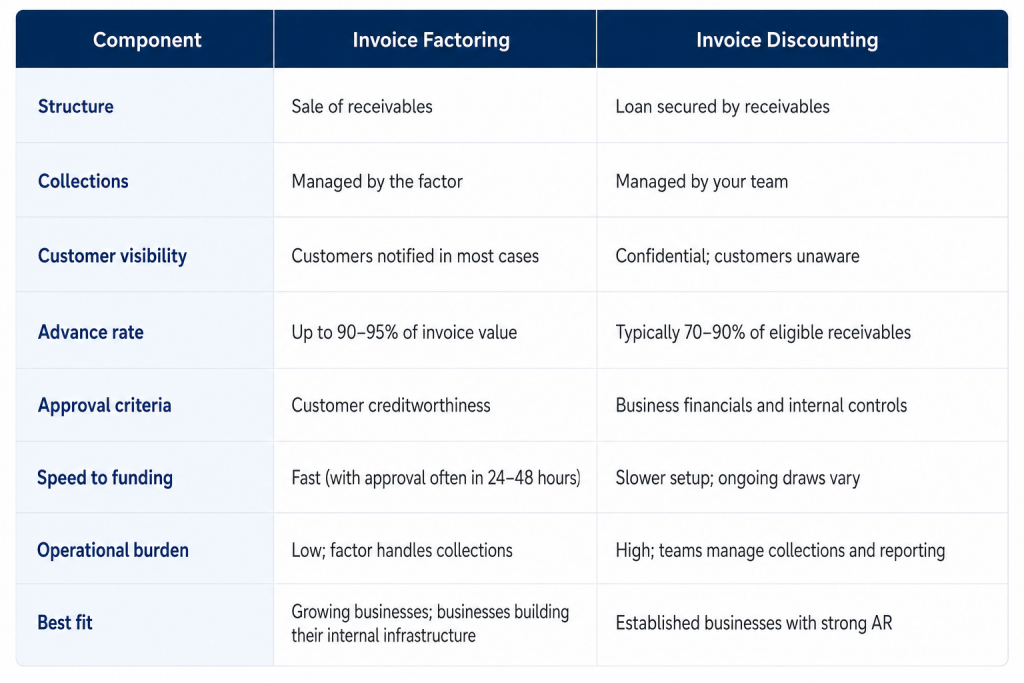
Comparison Table: Merchant Cash Advances vs. Invoice Factoring
What Are Merchant Cash Advances?
A merchant cash advance is a type of financing that provides a lump sum of cash in exchange for a percentage of future sales. Instead of a traditional interest rate, MCAs use a factor rate which determines how much you repay in total. Many MCAs are designed around expected future sales. But in practice, many providers collect through fixed daily or weekly debits rather than fully variable payments.
If you’re considering an MCA loan for a quick cash flow solution, there are some key considerations:
- Fast access to capital makes MCAs appealing in urgent situations
- Flexible qualification since approval is based on revenue
- Higher effective costs compared to most other financing options
- Cash flow pressure due to frequent (often daily) repayment withdrawals
While MCAs can be helpful for short-term needs, the cost and repayment structure can create ongoing strain. For many businesses, this makes managing cash flow challenging and can add significant financial stress, particularly in slower months.
How Does Invoice Factoring Compare?
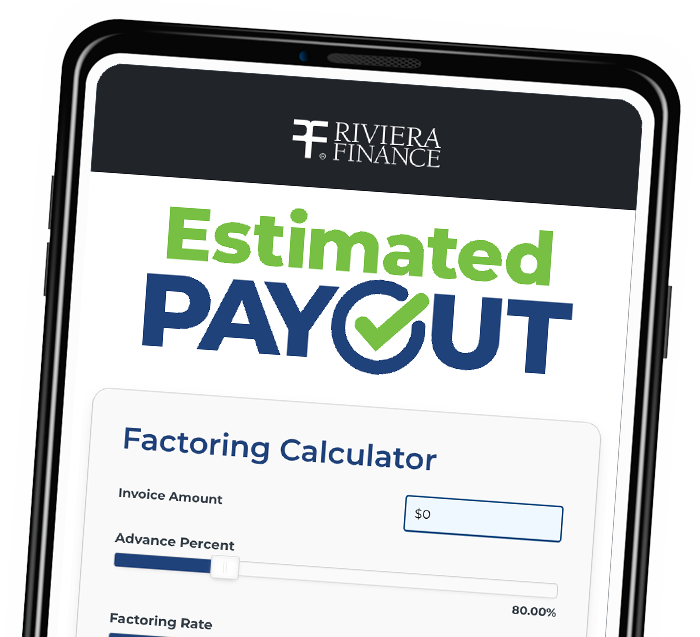
Invoice Factoring works differently from merchant cash advances. Instead of borrowing against future revenue, you sell your unpaid invoices to a factoring company and receive immediate cash upfront (often up to 80–95% of the invoice value).
The factoring company then collects payments directly from your customer. Once the invoice is paid, you receive the remaining balance minus a small fee.
Why Businesses Choose Factoring
- Uses money you’ve already earned (no speculation on future sales)
- Lower overall cost structure compared to MCAs
- No debt added to your balance sheet
- Improves cash flow predictability
- Scales with your growth—more invoices = more funding
An advantage to factoring is that many providers also handle collection and receivables management, reducing administrative workload.
The main limitation is that factoring is designed for business-to-business (B2B) because you need invoices issued to other businesses, not consumers.
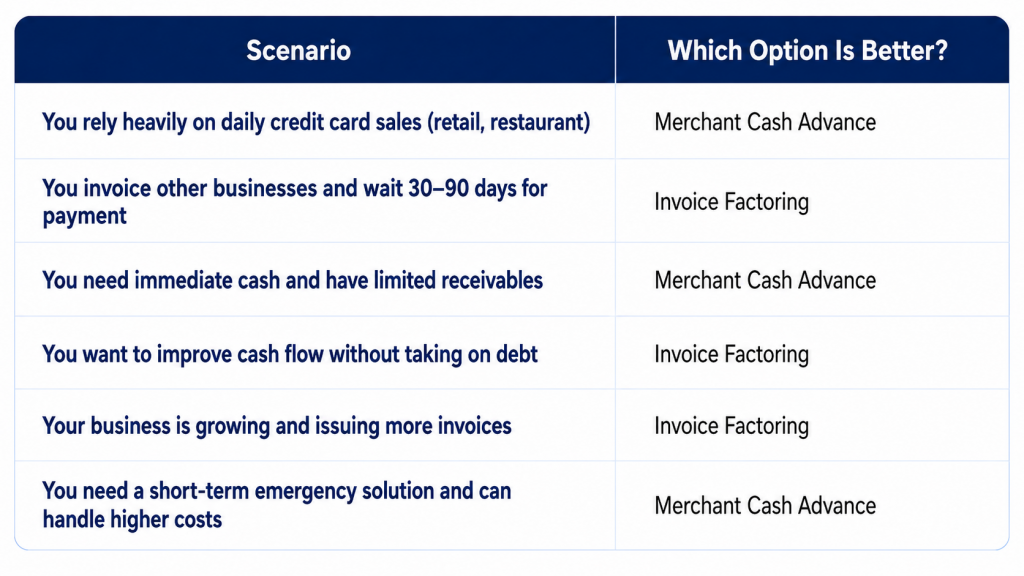
When Each Option Makes Sense
Choosing between an MCA and invoice factoring often comes down to your business model and how you generate revenue.
Reap the Benefits of Invoice Factoring
Both merchant cash advances and invoice factoring can provide you with immediate capital for your business. However, invoice factoring stands out as a more stable and cost-effective solution for many B2B businesses, especially those dealing with long payment cycles.
If you’re looking for a reliable funding partner, Riviera Finance has been providing financial solutions to businesses for more than 50 years.
Our Process

STEP 1
Apply
Complete form & become a Riviera client

STEP 2
Service
You deliver your products or services

STEP 3
Send
Send your invoices to Riviera Finance

STEP 4
Get Paid
Riviera verifies & pays you within 24 hours
Why Wait?
Start getting paid immediately
About The Author

Jacquelyn holds a degree in Business Administration and has over 17 years of experience in the commercial finance industry, including the past 7 years specializing in invoice factoring.